
Building the home you’ve always envisioned for retirement is one of the most meaningful decisions you’ll make. It’s also one of the most complex. Hiring builder custom home retirees face a different set of priorities than younger buyers: accessibility features, climate-conscious design, fixed budgets, and the need for a builder you genuinely trust over an 18-month relationship. Southern Utah’s Iron County has become a magnet for retirees who want warm weather, stunning red rock scenery, and a lower cost of living. But knowing how to find and vet the right builder in this market takes more than a Google search.
Table of Contents
- Key takeaways
- Hiring a builder for a custom home as a retiree: Utah licensing basics
- What to prepare before you start talking to builders
- The step-by-step hiring process for retirees
- Common pitfalls when hiring a custom home builder
- What you gain by doing this right
- My take on building a retirement home in Southern Utah
- Build your dream retirement home with Travis Larsen Construction
- FAQ
Key takeaways
| Point | Details |
|---|---|
| Verify licensing before signing | Check your builder’s active state license via Utah’s DOPL tool before any contracts are signed. |
| Budget for contingencies | Plan for 10-15% beyond your base quote to cover change orders and unexpected material costs. |
| Specialty trades need separate licenses | Your general contractor’s license does not cover electrical, plumbing, or HVAC work by law. |
| Ask for retiree references | Talk specifically to past retiree clients about communication, timeline, and accessibility design. |
| Get warranty details in writing | Standard workmanship, HVAC, and roofing warranties vary widely and should be spelled out in your contract. |
Hiring a builder for a custom home as a retiree: Utah licensing basics
Before you tour a model home or sit down for a consultation, you need to understand one foundational fact about Utah construction law. Any project over $3,000 requires a valid state contractor license. Hiring someone without one is not just a bad idea. Repeated unlicensed work is classified as a felony under Utah statute, which signals how seriously the state treats this issue.
Utah licenses fall into two main categories: general contractor and specialty contractor. A general contractor manages the overall project, coordinates subcontractors, and takes responsibility for the finished structure. Specialty contractors handle specific trades. Here’s where many retirees get tripped up:
- General contractor license covers overall construction management and structural work.
- Specialty licenses are required separately for electrical, plumbing, HVAC, and other regulated trades.
- A builder cannot legally perform your HVAC installation under a general contractor license alone. Subcontractors doing that work must hold their own specialty licenses.
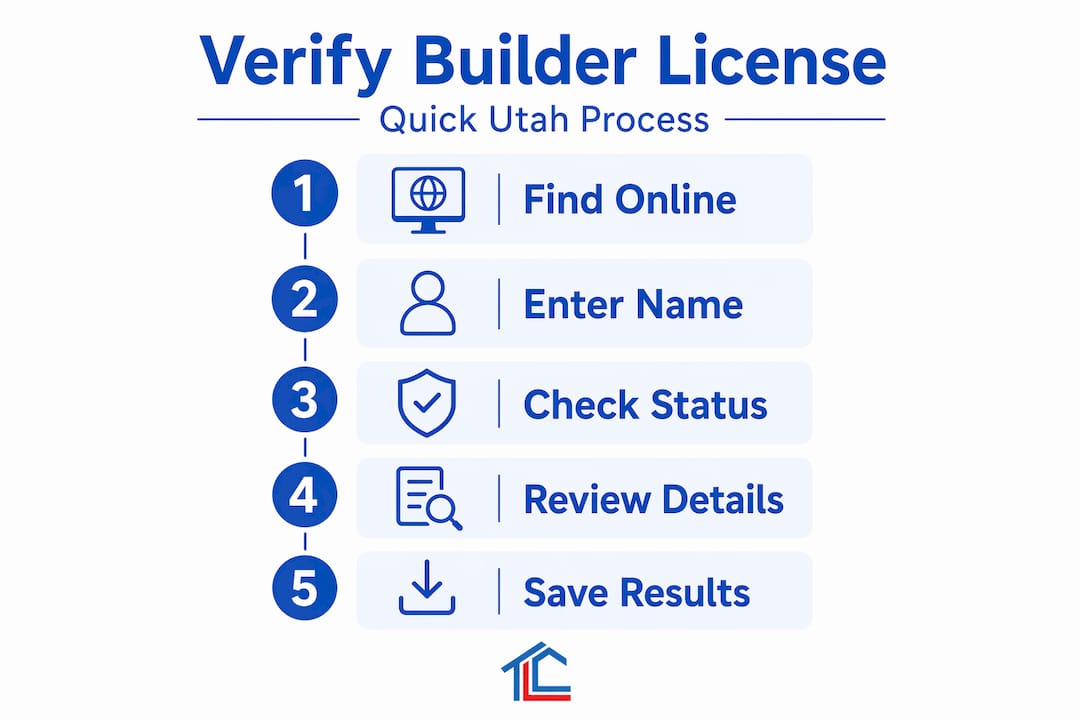
- License verification is done through Utah’s Division of Occupational and Professional Licensing, known as DOPL, which maintains a public database showing each license’s status, classification, expiration date, and any disciplinary history.
Pro Tip: Verify your builder’s license at the time you sign the contract, not just during your initial research. License status can change, and verifying at contract signing protects you if something goes wrong mid-project.
The DOPL lookup takes about two minutes and gives you information no sales pitch ever will. If a builder resists providing their license number, that alone tells you everything you need to know.
What to prepare before you start talking to builders
The most common mistake retirees make when approaching retired home construction is starting the builder search before they’ve defined what they actually want. A builder’s job is to execute your vision, not create it for you.
Start with your retirement lifestyle. Think concretely: Do you entertain regularly? Do you need a home office, a workshop, or a casita for visiting family? Are single-floor living and wider doorways non-negotiable? Southern Utah’s climate-aware custom design often includes covered patios, efficient HVAC systems, and outdoor living spaces that stay comfortable from March through November. Knowing what you want before the first meeting makes every conversation more productive and your budget more accurate.
Once you have a clear picture of your lifestyle needs, evaluate your financial position honestly. Beyond the base construction cost, factor in:
- Land purchase and site preparation if you haven’t already secured a lot.
- Architectural and design fees when those services are separate from the builder.
- A contingency reserve of 10-15% of the total budget for change orders, material price swings, or unexpected site conditions.
- Carrying costs for your current housing during the construction period.
When it comes to evaluating builders, look beyond the website. Verified references and past projects from other retirees specifically are more valuable than a portfolio of large custom homes built for younger buyers. The priorities are different. A builder who excels at a 5,000-square-foot showcase home for a 40-year-old executive may not have the patience or the design experience to guide a retired couple through accessibility planning and aging-in-place features.
Here’s a quick comparison of what to look for when evaluating builders:
| Factor | Strong signal | Red flag |
|---|---|---|
| References | Recent retiree clients who will talk to you | References from 5+ years ago or only commercial work |
| Design process | In-house design support with personalized guidance | You’re handed a catalog and told to pick |
| Budget transparency | Detailed line-item proposals | Vague lump-sum estimates |
| Communication style | Regular updates, single point of contact | Multiple contacts, unclear who to call |
| License status | Active, verified via DOPL | Cannot provide a license number |
Finally, decide early whether you want to hire an architect separately or work with a design-build firm. Bundled architecture and construction services simplify communication, but may reduce design flexibility. Understanding the role of architect vs. contractor before you commit to a structure helps you choose the right setup for your priorities.
The step-by-step hiring process for retirees
Once you’re prepared, the actual process of hiring contractors for retirement homes follows a logical sequence. Staying organized at each step saves money and prevents disputes.
- Create a short list. Identify three to five builders in Southern Utah who specialize in custom residential construction. Ask neighbors, your real estate agent, or local senior community groups for referrals. Reputation travels fast in Iron County.
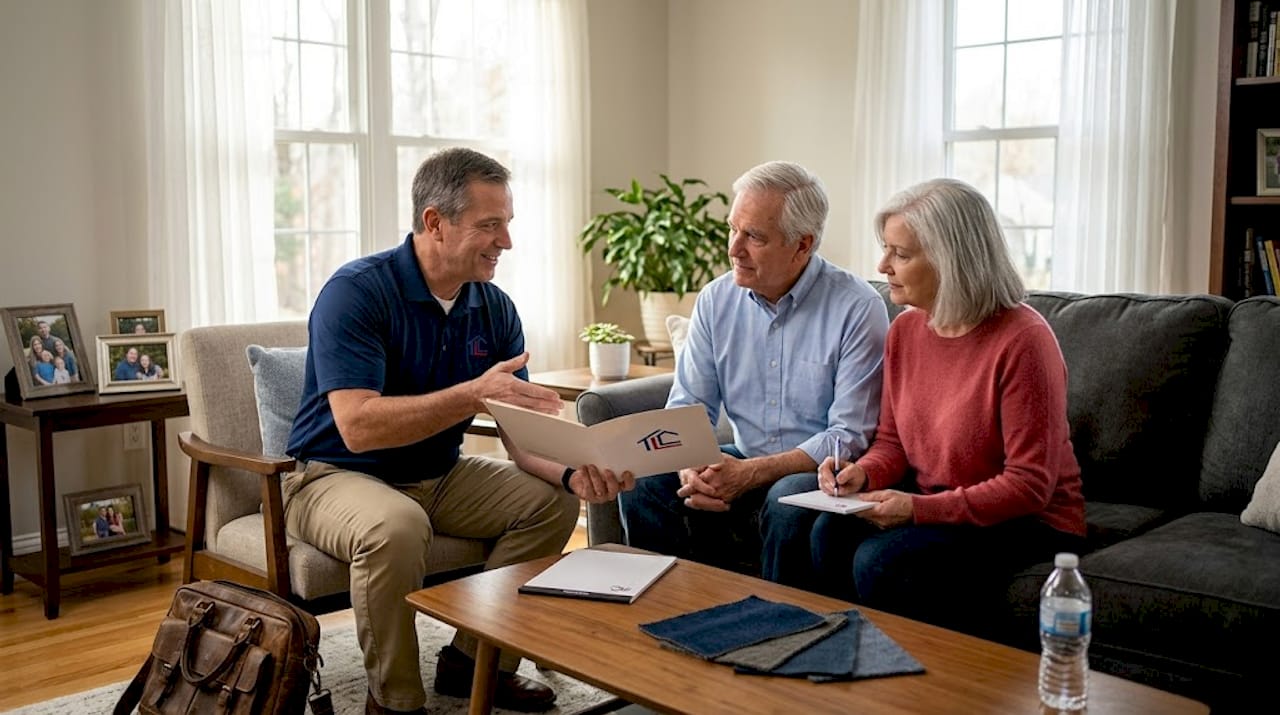
- Conduct structured interviews. Treat the first meeting like a job interview. Ask direct questions about their experience with retiree clients, typical project timelines, how they handle change orders, and who your day-to-day contact will be. Your guide to selecting a custom builder can sharpen the specific questions you bring.
- Request detailed bids. Ask each builder for a written proposal with itemized costs. The lowest bid is rarely the safest choice. Compliance, insurance, and quality materials cost money. A bid that seems unusually low often reflects corners being cut somewhere.
- Review the contract carefully. Before signing anything, read every line. Pay specific attention to the payment schedule, dispute resolution clauses, change order procedures, and the defined project completion date.
- Establish a communication rhythm. Agree upfront on how often you’ll receive progress updates, whether that’s weekly calls, site visits, or written reports. Consistent communication prevents small problems from becoming expensive surprises.
- Understand your warranty coverage. Get all warranties in writing. Standard workmanship warranties typically cover one year; HVAC systems carry five to ten years; roofing warranties can run anywhere from ten to fifty years depending on materials chosen.
Pro Tip: Never make large lump-sum payments upfront. A standard payment schedule ties disbursements to specific construction milestones, which protects you if the project stalls or the builder encounters financial problems.
Common pitfalls when hiring a custom home builder
Even well-prepared retirees run into avoidable problems. The best builders for custom homes will tell you the same things come up repeatedly.
The most dangerous assumption is that a municipal business license equals a contractor license. A business license only authorizes commercial activity, not regulated construction work. A builder can legally operate a business in a city without ever holding a state contractor license. Always check DOPL separately.
Watch for these additional pitfalls:
- Skipping insurance verification. Ask for certificates of general liability and workers’ compensation insurance directly from the insurer, not just a copy from the builder. Coverage lapses happen.
- Ignoring lien waivers. If your builder fails to pay a subcontractor, that subcontractor can place a lien on your property even though you paid the general contractor in full. Request lien waivers from subcontractors as each phase is completed.
- Unclear change order terms. Verbal approvals for changes cost retirees significant money each year. Every change to the original scope should be documented in writing with a revised cost before work begins. Clear change order procedures are not bureaucratic. They are your financial protection.
- Underestimating the timeline. Custom homes in Southern Utah typically take twelve to twenty-four months from permit approval to move-in. Supply chain disruptions, weather, and permit delays are real. Build a realistic buffer into your housing plan before you break ground.
- Hiring unlicensed builders for cost savings. The short-term savings are not worth it. Unlicensed work can trigger insurance denial, eliminate your legal recourse, and in some cases lead to criminal liability for the homeowner.
What you gain by doing this right
When you invest the time to vet your builder properly, the benefits go far beyond avoiding problems. You get a home that actually fits the life you planned.
A licensed, insured builder with genuine experience in retiree custom home projects brings something that no amount of online research can replace: local knowledge of Iron County’s permitting process, trusted subcontractor relationships, and a realistic understanding of what your budget will actually build. Custom designs optimized for Southern Utah’s climate mean lower utility bills, outdoor spaces you can use year-round, and a home that holds its value.
“The difference between a retiree who loves their custom home and one who regrets it usually comes down to one thing: how much time they spent vetting the builder before signing. The home itself reflects that decision every single day.”
Warranty protection and post-build support from a reputable builder also give you a clear path if something goes wrong after move-in. That peace of mind is worth more than any discount a less reputable contractor might offer upfront.
My take on building a retirement home in Southern Utah
I’ve worked with enough retirees in Iron County to know that the ones who have the smoothest build experiences share a few habits that most people overlook.
The first is visiting completed homes, not just looking at photos. Photos are curated. Walking through a finished home tells you about ceiling height, natural light, how rooms flow together, and whether the finishes actually look like the renders. More importantly, I’d encourage you to talk to the people who live there. Ask them directly: Did the builder finish on time? How did they handle problems when they came up? Would you hire them again?
The second habit is being honest about your budget ceiling before the first meeting. I’ve seen retirees tell builders a lower number than their real ceiling, thinking it protects them from being overcharged. It usually backfires. It leads to designs that get scaled back, then scope creep when you add back features you always wanted. Start honest and your builder can give you a realistic plan.
Here’s what I think gets overlooked in most guides for building a retirement house: myths about cost and timeline are the biggest source of frustration. Many retirees come in expecting custom construction to work like buying an existing home. It doesn’t. Things take longer than you expect, and decisions pile up fast. The builders who serve retirees well are the ones who set realistic expectations from day one, not the ones who tell you what you want to hear to win the contract.
— Kaidden
Build your dream retirement home with Travis Larsen Construction
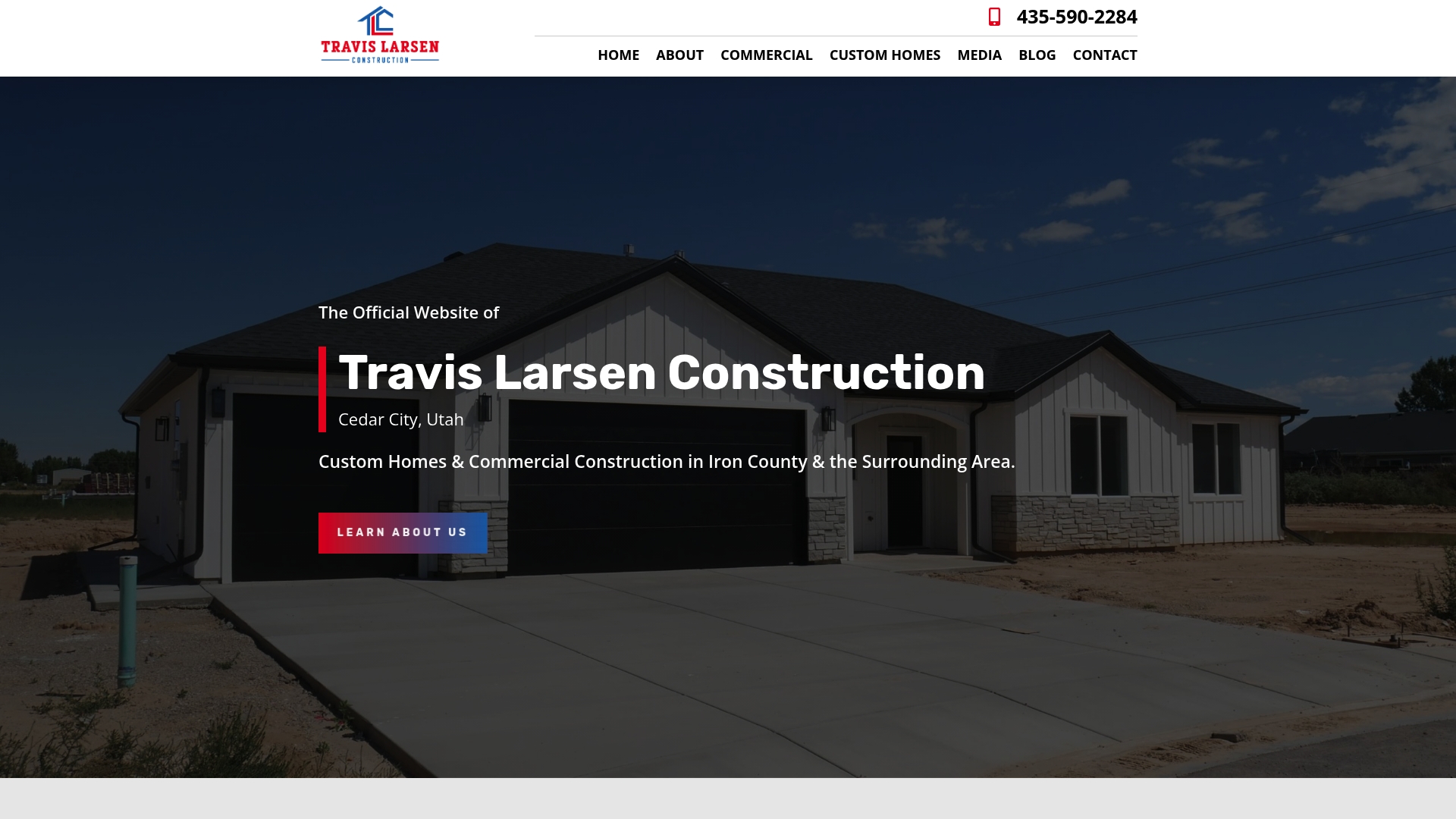
Travis Larsen Construction has spent over 25 years building high-end custom homes across Iron County, with a focused approach to guiding clients through every step from design to move-in. Retirees working with Travis Larsen Construction get dedicated in-house design support, a single point of contact, and a team that treats budget and timeline commitments as non-negotiable. The company’s deep familiarity with Southern Utah’s local permitting, climate, and subcontractor network means fewer surprises and faster resolutions when challenges come up. If you’re ready to build the retirement home you’ve been planning, start with a conversation. Visit Travis Larsen Construction to explore how their personalized custom home services can bring your vision to life.
FAQ
Does a general contractor in Utah cover all trades?
No. A general contractor license does not authorize electrical, plumbing, or HVAC work. Subcontractors performing those trades must hold independent specialty licenses.
How do I verify a builder’s license in Utah?
Use Utah’s DOPL public lookup tool to check a contractor’s active license status, classification, expiration date, and any disciplinary history before signing a contract.
What questions should I ask when hiring a custom home builder?
Ask about their experience with retiree clients specifically, how they structure change orders, who your primary contact will be, and what their warranty terms cover for workmanship, HVAC, and roofing.
What are standard warranties on a new custom home in Utah?
Workmanship warranties typically cover one year, HVAC system warranties span five to ten years, and roofing warranties range from ten to fifty years depending on materials.
Is the lowest bid from a custom home builder the safest choice?
Rarely. The lowest bid often reflects gaps in licensing, insurance coverage, or material quality. Compliance and proper coverage cost money, and skipping them creates significant financial and legal risk for the homeowner.