
Custom home selections is the process where you choose every material, finish, and fixture that defines your home’s appearance and directly controls construction scheduling and cost. Most homebuyers treat this as a design exercise. It is actually an operational process with hard deadlines, procurement dependencies, and real financial consequences when decisions arrive late. Builders like Travislarsenconstruction, Crosland Construction, and Engelsma Homes all structure their projects around a formal selections workflow because the choices you make, and when you make them, determine whether your build stays on schedule and on budget.
How custom home selections work: categories and types
The custom home building process begins with a defined set of selection categories. These categories cover every surface, fixture, and finish in your home. Understanding what falls into each group helps you prioritize your time and budget from day one.
The major selection categories include:
- Cabinetry: Kitchen, bathroom, and built-in storage. Cabinet layout is one of the first decisions locked in because it drives electrical outlet placement, lighting positions, and plumbing rough-in locations.
- Countertops: Quartz, granite, marble, and solid surface options. Countertop templating cannot happen until cabinets are installed, so delays here cascade forward.
- Flooring: Hardwood, tile, luxury vinyl plank, and carpet. Flooring type affects subfloor prep and transitions between rooms.
- Lighting: Recessed cans, pendants, sconces, and ceiling fixtures. Lighting placement is tied to cabinet layout and ceiling framing decisions.
- Plumbing fixtures: Faucets, showerheads, tubs, and toilets. Fixture rough-in dimensions must be confirmed before walls close.
- Hardware: Door handles, cabinet pulls, and hinges. These are among the most flexible selections and can often be finalized later.
Builders and designers separate selections into two groups: long-lead items and flexible finishes. Long-lead items like custom cabinetry, specialty tile, and custom windows require 6–14 weeks for delivery after ordering. That lead time means missing an early deadline does not just delay one task. It delays every task that depends on that item arriving on site.
Material selection is a collaborative process tied to design intent, budget, and lifestyle. Your builder and designer use your selections to align expectations across the entire project team before a single nail is driven.

Pro Tip: Build a two-tier list before your first selections meeting. Put every long-lead item on Tier 1 and every flexible finish on Tier 2. Attack Tier 1 first, every time.
Why does the timing of selections affect your build?
Selections are sequenced to match construction phases, and the order is not arbitrary. Cabinet layout decisions directly affect electrical outlet placement, lighting rough-ins, and plumbing locations. Change your cabinet layout after rough-in and you are paying to move wires and pipes.
The typical construction sequence runs like this:
- Weeks 8–14 (Rough-ins): Electrical, plumbing, and HVAC are roughed in. Cabinet layout and plumbing fixture specs must be confirmed before this phase closes.
- Weeks 12–18 (Drywall): Walls close. Any changes to what is behind them become expensive. Lighting locations and electrical panel specs must be finalized.
- Weeks 16–24 (Cabinets, countertops, and finishes): Cabinets are installed, countertops are templated, and finish materials arrive on site. All long-lead items must be ordered well before this window opens.
Missing a firm deadline does not just delay ordering. It forces last-minute substitutions that impact cost and quality. A homeowner who misses the cabinet deadline by two weeks may find their preferred door style is backordered, leaving them with a second-choice product or a delayed installation that pushes every downstream task back.
“Delays in selecting long-lead items ripple through multiple later tasks, making early and firm decisions essential to schedule integrity.” — Crosland Construction
Documented decisions matter as much as timely ones. When a selection is verbal or informal, version drift occurs. The homeowner remembers one finish, the supplier has a different SKU on file, and the installer shows up with the wrong product. Every confirmed selection should exist as a written record with a product name, model number, color code, and the date it was approved.
What does a decision schedule actually include?
A decision schedule is the master document that connects your selections to your construction calendar. Without a decision schedule, selections stay open-ended and cause delays and confusion across the project team. OakWood and other production builders treat this document as a non-negotiable project management tool.
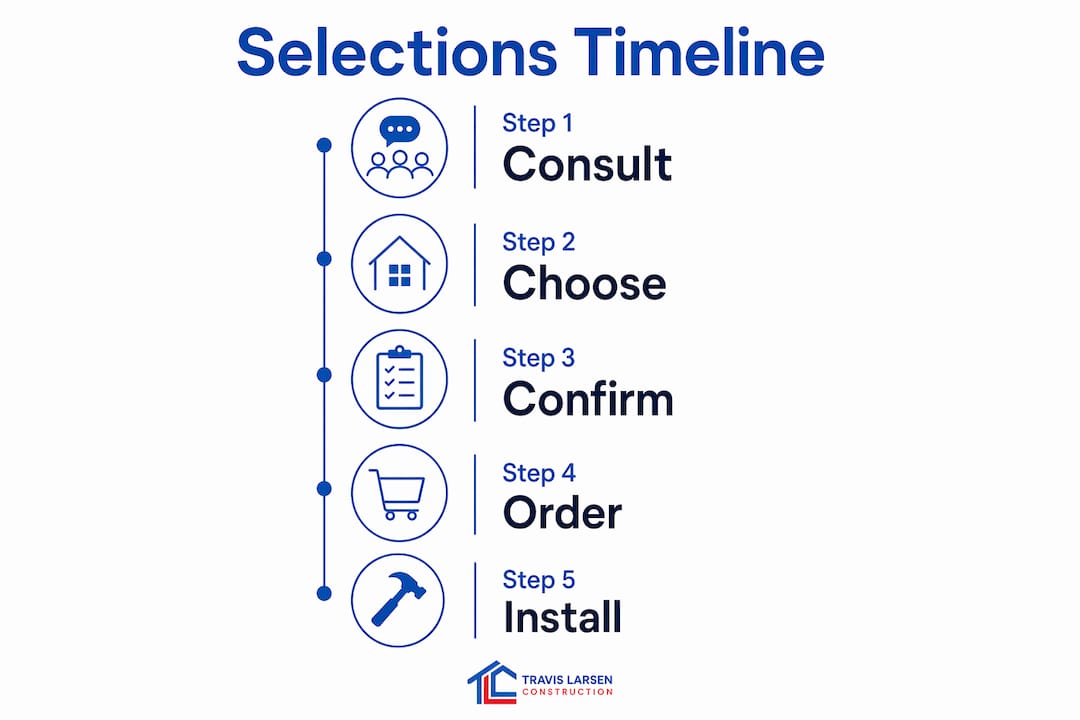
A complete decision schedule includes the following for each selection category:
| Column | What It Tracks |
|---|---|
| Category | The selection type (flooring, cabinetry, lighting, etc.) |
| Decision Deadline | The date the homeowner must confirm the selection |
| Required Documentation | Product name, model, color, and supplier contact |
| Approver | Who signs off: homeowner, designer, or builder |
| Order Date | When the builder places the order after approval |
| Expected Delivery | Confirmed ship date from the supplier in writing |
| Installation Window | The construction phase when the item is needed on site |
Linking selection deadlines to downstream ordering, delivery, and installation dates reflects construction realities and prevents cost and schedule overruns. This is not paperwork for its own sake. It is the mechanism that keeps 20 or more concurrent decisions from colliding with each other.
One detail most homeowners miss: signing a selection sheet does not always lock in your choice. The real lock-in moment occurs when the builder sends the item to production or places the order. Knowing this distinction gives you a clearer picture of your actual flexibility at any point in the process.
Pro Tip: Ask your builder to show you the exact date each selection goes to order. That date, not your signature date, is when your choice becomes final.
Most clients complete selections within 8–10 weeks, but the pace depends heavily on how quickly you make decisions. Slow decision-making is the single most common cause of self-inflicted schedule delays in custom home projects.
How should you prioritize selections for budget and quality?
Prioritizing selections is a strategy, not a preference exercise. Experts advise focusing budget on flooring, cabinetry, tile, and countertops rather than paint or lighting. The logic is straightforward: expensive or disruptive-to-change finishes deserve your best dollars, while easy-to-update accents can be addressed later at lower cost.
Here is how to apply that logic across your selections:
- Spend more on: Hardwood or large-format tile flooring, custom cabinetry with quality box construction, quartz or stone countertops, and structural tile work in showers and backsplashes. These items are difficult and expensive to replace once installed.
- Save on: Paint colors, light fixtures, cabinet hardware, and window treatments. All of these can be swapped out in a weekend without touching the structure of your home.
- Use a timeless base palette: Neutral flooring tones, white or off-white cabinetry, and classic countertop patterns age well. Trend-forward choices work best as accents, not as the foundation of your design.
Designers recommend prioritizing timeless foundation finishes while using trend-forward accents that are easier to update later at lower cost. This approach protects your investment and keeps your home from feeling dated in five years.
Working with your builder’s in-house design team during the custom home selection guide process also reduces the risk of mismatches. A designer who knows your floor plan will catch conflicts between your selections before they become field problems. For example, a large-format tile that looks stunning in a showroom may require a thicker mortar bed that conflicts with your door threshold heights. Catching that in the design phase costs nothing. Catching it during installation costs real money.
Reviewing your custom home budget before finalizing selections gives you a clear ceiling for each category. Allocate budget by category before you walk into a showroom, not after you fall in love with a product.
Key takeaways
The custom home selections process is an operational system where timing, documentation, and prioritization determine whether your build finishes on schedule and within budget.
| Point | Details |
|---|---|
| Selections drive construction sequencing | Cabinet layout must be confirmed before rough-ins begin, as it affects electrical, plumbing, and lighting placement. |
| Long-lead items require early decisions | Cabinets, specialty tile, and custom windows carry 6–14 week lead times that must be ordered well ahead of installation. |
| Signing does not always lock in a choice | The real commitment happens when the builder places the order, not when the homeowner signs the selection sheet. |
| A decision schedule prevents delays | Linking each selection to its order date, delivery window, and installation phase keeps the entire project team aligned. |
| Spend on hard-to-change finishes first | Prioritize flooring, cabinetry, and countertops for quality investment; save flexible budget for paint, hardware, and lighting. |
The part of selections nobody warns you about
I have watched homeowners spend months agonizing over paint colors and then rush through cabinet decisions in a single afternoon. That is exactly backwards. Paint is a weekend project. Cabinets are a 20-year commitment.
The part of the custom home building process that catches people off guard is not the volume of decisions. It is the sequence. You cannot make selections in the order that feels comfortable to you. You have to make them in the order the construction schedule demands. That shift in mindset is the single biggest adjustment I see homeowners struggle with.
The other thing worth saying plainly: your builder’s decision schedule is not bureaucracy. It is protection for you. When a builder at Travislarsenconstruction sets a cabinet selection deadline six weeks before installation, that deadline exists because the lead time is real. Pushing back on it does not buy you more time. It just moves the problem downstream where it costs more to fix.
I also think homeowners underestimate the value of having a backup selection ready for every long-lead item. Confirm your first choice, then identify a second choice from a different supplier. If your preferred tile is backordered, you want a decision ready in 24 hours, not two weeks. That preparation is what separates builds that finish on time from builds that do not.
The residential project workflow is more interconnected than most people realize until they are living through it. Treat your selections as the operational decisions they are, and your build will reflect that discipline.
— Kaidden
How Travislarsenconstruction guides you through every selection
Travislarsenconstruction brings over 25 years of custom home building experience in Iron County to every selections conversation. The team handles design and selections coordination in-house, which means your designer, builder, and project manager are working from the same document at the same time.
Clients consistently report that having a single point of contact for selections, scheduling, and budget questions removes the confusion that derails so many custom builds. Travislarsenconstruction’s commitment to timeline and budget adherence starts with a structured selections process that keeps decisions moving at the pace construction demands. If you are ready to start your custom home project with a team that treats selections as seriously as framing and foundation work, Travislarsenconstruction is the right partner. You can also review the builder selection guide to understand what to look for before you commit.
FAQ
What is the first selection homeowners should make?
Cabinet layout is the first critical selection because it directly determines electrical outlet placement, plumbing rough-in locations, and lighting positions. Confirming cabinets before rough-ins begin prevents expensive field changes.
How long does the selections process take?
Most homeowners complete selections within 8–10 weeks, though the pace depends on how quickly decisions are made and whether long-lead items are available.
When does a selection become final and unchangeable?
A selection becomes final when the builder places the order or sends the item to production, not when the homeowner signs the selection sheet. Ask your builder for the exact order date for each item.
What happens if i miss a selection deadline?
Missing a deadline delays ordering, which can force last-minute substitutions that impact cost and quality. In the worst case, a backordered item pushes installation back by weeks and delays every task that follows.
Which selections are worth spending more on?
Flooring, cabinetry, tile, and countertops are the highest-priority categories for budget allocation because they are expensive and disruptive to replace. Paint, hardware, and light fixtures can be updated later at a fraction of the cost.