
Choosing the wrong custom home builder is one of the most expensive mistakes you can make. We’re talking about blown budgets, months of delays, and a finished home that doesn’t match what you envisioned. This guide to selecting a custom home builder walks you through every critical step, from understanding what to look for in qualifications to the exact questions to ask before you sign anything. Whether you’re building for the first time or you’ve been burned before, this is the information that actually changes outcomes.
Table of Contents
Key takeaways
| Point |
Details |
| Verify licenses and experience |
Confirm your builder holds proper licenses, insurance, and has at least 3-5 years of stable operation. |
| Ask detailed contract questions |
Request line-item estimates and clarify change order procedures before signing anything. |
| Never choose on price alone |
The lowest bid often becomes the most expensive due to hidden exclusions and change orders. |
| Schedule an 11-month review |
Book a warranty walkthrough before your first year ends to catch workmanship issues in time. |
| Communication predicts your experience |
A builder’s responsiveness during consultation tells you exactly how they’ll behave during your build. |
What a custom home builder actually does
Before you start comparing names, you need to understand what separates a custom home builder from a production builder. Production builders construct homes from a fixed set of floor plans on land they own. You pick from their options. A custom builder, by contrast, works on your land, with your architect or their in-house designer, building to your specifications from the ground up. That distinction matters because the skill set, process, and accountability are completely different.
When evaluating qualifications, focus on these non-negotiables:
- State contractor’s license: Verify it’s current and in good standing with your state licensing board.
- General liability insurance: Protects you if property damage occurs during construction.
- Workers’ compensation coverage: Covers injuries to workers on your site. Without it, you could be liable.
- Industry association membership: Builder association involvement signals ongoing education and commitment to best practices.
- Local code familiarity: A builder who regularly works in your county understands permit timelines, inspector expectations, and regional building requirements.
Longevity matters more than most buyers realize.
Builders typically need 3-5 years in business to achieve the financial stability required to honor warranties and stay operational after your home is complete. A two-year-old company with a flashy website is a gamble you don’t need to take.
Pro Tip: Ask your builder for their contractor’s license number and look it up yourself on your state’s licensing board website. It takes two minutes and tells you immediately if there are any complaints or lapses.
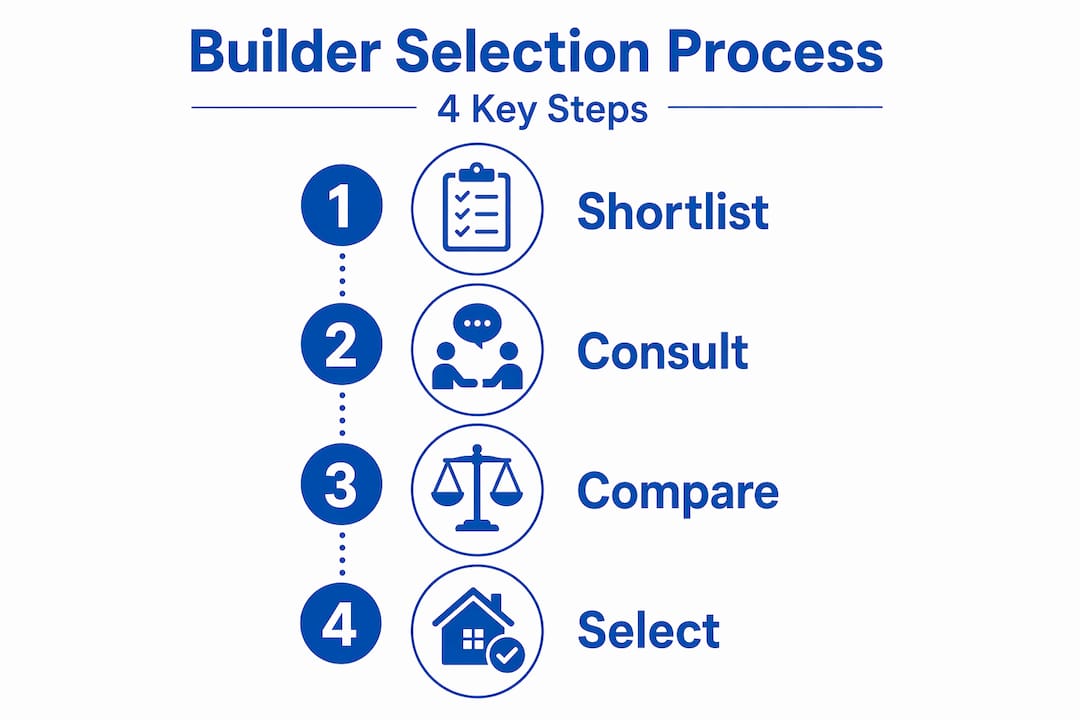
How to build your shortlist of custom home builders
Word of mouth is still the most reliable starting point. Ask your real estate agent, your neighbors who recently built, and anyone in your circle who has gone through a custom build. These referrals come with firsthand experience that no website review can replicate.
Beyond personal referrals, here are the most effective research channels:
- National Association of Home Builders (NAHB) directory: Lists vetted builders by location with credentials.
- Local home builders associations: Regional chapters often maintain member directories with verified credentials.
- Better Business Bureau: Check for unresolved complaints and how the builder responded to them.
- State contractor licensing board: Confirm active licensure and check for disciplinary actions.
- Google and Houzz reviews: Look for patterns across multiple reviews, not just the rating.
Once you have names, visit completed projects in person if possible. Photos on a website are curated. Walking through a finished home tells you about trim quality, how doors hang, how tile lines up, and whether the finishes hold up to close inspection.
Selecting a builder with strong local experience reduces delays and cost overruns tied to permits, inspections, and regional requirements. That local knowledge is worth more than a builder who does beautiful work two states away.
Narrow your list to three candidates before you start scheduling consultations. More than that and the process becomes overwhelming and comparison becomes harder.
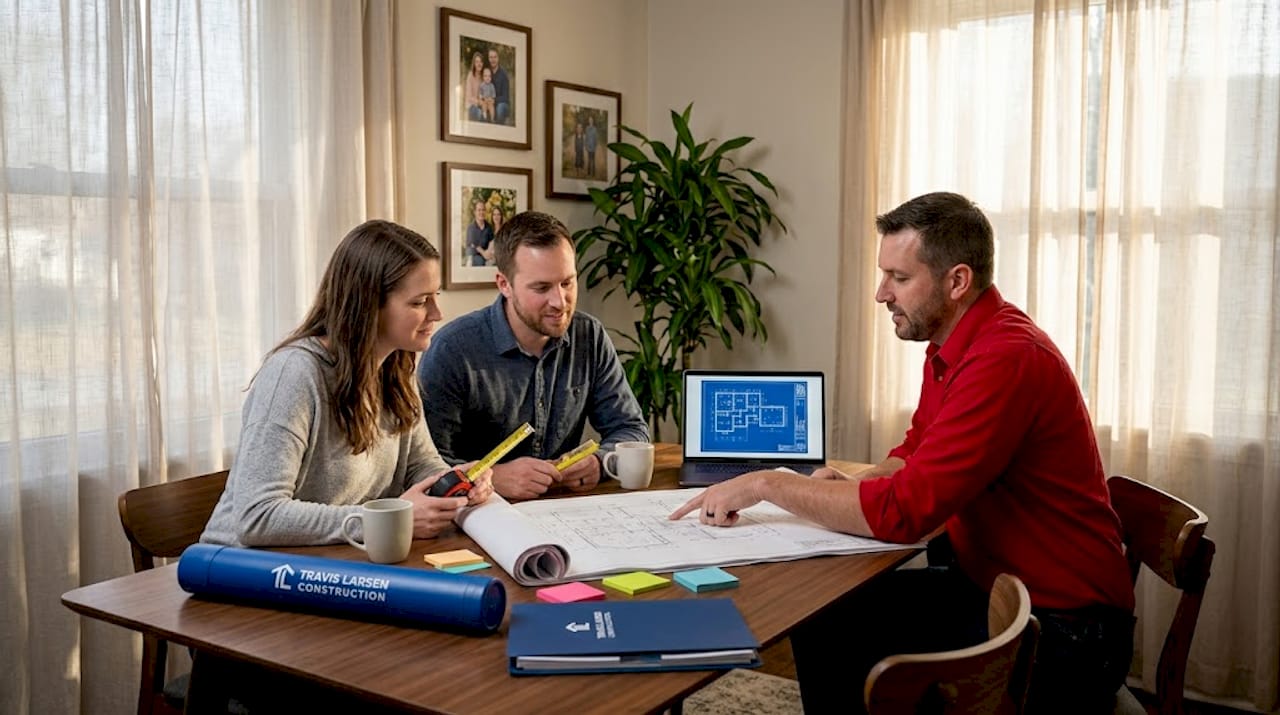
Questions to ask during builder consultations
This is where most buyers leave money and peace of mind on the table. They tour a model home, get excited, and sign before asking the questions that actually protect them. Don’t do that.
Here is a structured approach to your consultations:
- Request a line-item estimate. A vague “all-in” number is not a contract. You need to see what’s included, what’s excluded, and what the allowances are for finishes like flooring, cabinets, and fixtures. Allowances that are too low will cost you more when you make actual selections.
- Ask about the change order process. Changes during construction are normal. What matters is how they’re handled. Effective change order protocols require clear documentation of cost and time impact with your written approval before any work proceeds. A builder who handles changes verbally is a builder who will dispute costs later.
- Clarify the payment schedule. Payments should be tied to construction milestones, not arbitrary dates. Ask what triggers each payment and what happens if a milestone isn’t reached.
- Ask about the contingency fund. Experts recommend setting aside 5-15% of your total construction cost for unexpected expenses. Ask whether this is built into their estimate or something you need to plan separately.
- Understand warranty coverage. Homeowners cannot purchase a 10-year structural warranty themselves. The builder must purchase it at the time of sale. Ask specifically what’s covered, for how long, and who administers the warranty if there’s a claim.
- Evaluate communication style. How quickly did they respond to your initial inquiry? Do they answer questions directly or deflect? Builder responsiveness and willingness to educate homeowners throughout the process strongly correlates with customer satisfaction and fewer disputes.
Pro Tip: Bring a written list of questions to every consultation and take notes. If a builder resists answering specific questions about contracts or change orders, that resistance is your answer. Transparent builders welcome detailed questions because they have nothing to hide.
Common mistakes to avoid when comparing builders
The single biggest mistake buyers make is choosing the lowest bid. It feels financially responsible. It almost never is.
Lowest bids often result in higher final costs because low estimates exclude scope that gets added back through change orders once you’re committed to the project.
Here’s a comparison of what to actually weigh when evaluating builders side by side:
| Evaluation Factor |
What to Look For |
Red Flag |
| Estimate detail |
Line-item breakdown with allowances |
Lump sum with no breakdown |
| Contract clarity |
Defined scope, timeline, and change order process |
Vague language or verbal agreements |
| Local experience |
Familiarity with local codes and inspectors |
No recent local projects |
| Warranty coverage |
Written warranty with clear terms |
Verbal warranty promises only |
| References |
Multiple recent clients willing to talk |
Reluctance to provide references |
| Financial stability |
3+ years in business, established subcontractors |
New company, frequent sub turnover |
Beyond the table, watch for these specific pitfalls:
- Skipping reference calls because you’re in a hurry. Call them. Ask directly about surprises, communication problems, and whether they’d build with that company again.
- Ignoring how decisions on materials affect your timeline. Late decisions on materials are significantly more expensive than early planning decisions because of lead times and construction sequencing.
- Assuming a beautiful model home means flawless execution on your custom build. Model homes are marketing tools. Ask to see spec homes and client projects instead.
What to expect after you select your builder
Signing the contract is the beginning, not the finish line. Knowing what comes next helps you stay organized and protect your investment throughout the build.
| Project Stage |
Typical Duration |
Your Role |
| Pre-construction planning |
4-8 weeks |
Finalize selections, approve plans, secure permits |
| Foundation and framing |
6-10 weeks |
Attend scheduled site walkthroughs |
| Mechanical rough-ins |
4-6 weeks |
Review progress, confirm change orders in writing |
| Interior finishes |
8-14 weeks |
Make final selections early to avoid delays |
| Final inspections and punch list |
2-4 weeks |
Document every item needing correction |
| 11-month warranty review |
1 day |
Conduct thorough walkthrough and submit written list |
Experienced builders provide detailed checklists for each construction stage to maintain quality and timeline adherence. Ask your builder for theirs before construction starts.
The 11-month warranty review deserves special attention.
Scheduling this review before your first year ends is critical for catching workmanship issues before the warranty expires. Document everything in writing and submit it formally. Verbal reports at a walkthrough are not enough.
Set communication expectations from day one. Agree on how often you’ll receive updates, who your primary contact is, and what the process is for raising concerns. Builders with integrated design and build teams can deliver custom homes as efficiently as production builders when communication systems are in place.
My honest take on what actually matters
I’ve seen clients spend weeks comparing portfolio photos and square footage costs, then completely overlook the one thing that determines whether their build goes smoothly: how a builder communicates under pressure.
In my experience, the builders who answer emails within 24 hours during the sales process are the same ones who call you proactively when a framing issue shows up on site. The ones who go quiet or deflect during consultation will do the same thing when you’re three months into construction and something goes wrong.
Transparent pricing and detailed contracts are non-negotiable for me. Not because I distrust builders as a category, but because a detailed contract protects everyone. When the scope is written clearly, there’s no room for “that wasn’t included” conversations that turn into arguments. The best builders I’ve encountered actually prefer detailed contracts because it removes ambiguity from their side too.
Local knowledge is underrated. A builder who has pulled permits in your county, worked with your local inspectors, and sourced materials from regional suppliers will move faster and hit fewer walls than an out-of-area builder doing their first project in your jurisdiction.
If I had one piece of advice for someone in the planning phase right now, it would be this: treat the consultation like a job interview where you’re the one doing the hiring. Because you are.
— Kaidden
Build your dream home with Travis Larsen Construction
At
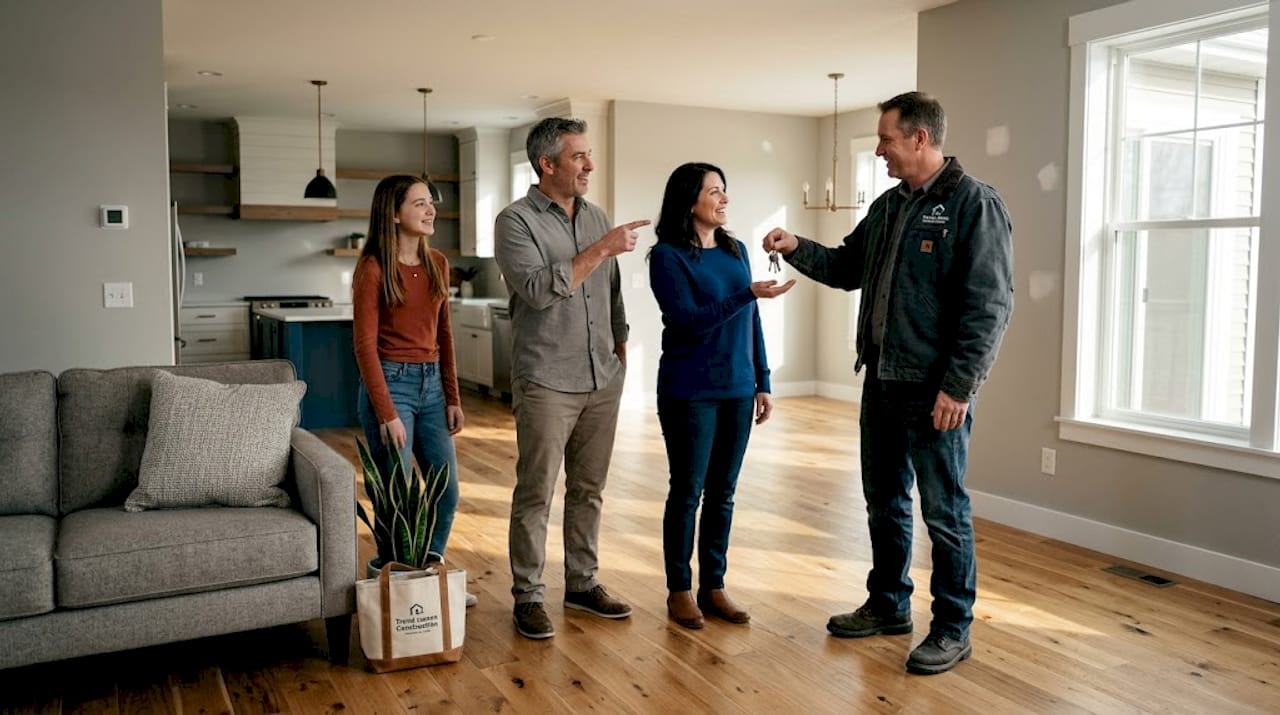
Travis Larsen Construction, the process is built around exactly what this guide covers: transparent pricing, detailed contracts, clear communication, and deep local expertise. Every client gets a dedicated point of contact, line-item estimates from the start, and a team that treats your build with the same care they’d give their own home. Travis Larsen Construction specializes in high-end custom homes and brings the kind of hands-on experience that makes the difference between a stressful build and one you’ll enjoy telling people about. If you’re ready to move from planning to building, reach out to explore what a truly client-centered process looks like.
FAQ
What’s the difference between a custom and production builder?
A production builder constructs homes from fixed floor plans on their own land. A custom builder works on your land, to your specifications, giving you full control over design and materials.
How many builders should I interview before deciding?
Interview at least three builders. This gives you enough comparison points to evaluate pricing, communication, and contract quality without making the process unmanageable.
What questions should I ask about warranties?
Ask what’s covered, for how long, and who administers the warranty. Confirm that a structural warranty is purchased by the builder at closing, since homeowners cannot purchase this coverage themselves.
Is the lowest bid always a bad sign?
Not always, but it warrants scrutiny. Ask for a line-item breakdown and compare scope carefully. Low bids often exclude items that get added back as change orders, making the final cost higher than a more transparent bid.
When should I schedule my 11-month warranty review?
Schedule it at least 30 days before your one-year anniversary date. This gives you time to document issues, submit them formally, and allow the builder to respond before the warranty period closes.
Recommended
Article generated by BabyLoveGrowth
 Choosing the wrong custom home builder is one of the most expensive mistakes you can make. We’re talking about blown budgets, months of delays, and a finished home that doesn’t match what you envisioned. This guide to selecting a custom home builder walks you through every critical step, from understanding what to look for in qualifications to the exact questions to ask before you sign anything. Whether you’re building for the first time or you’ve been burned before, this is the information that actually changes outcomes.
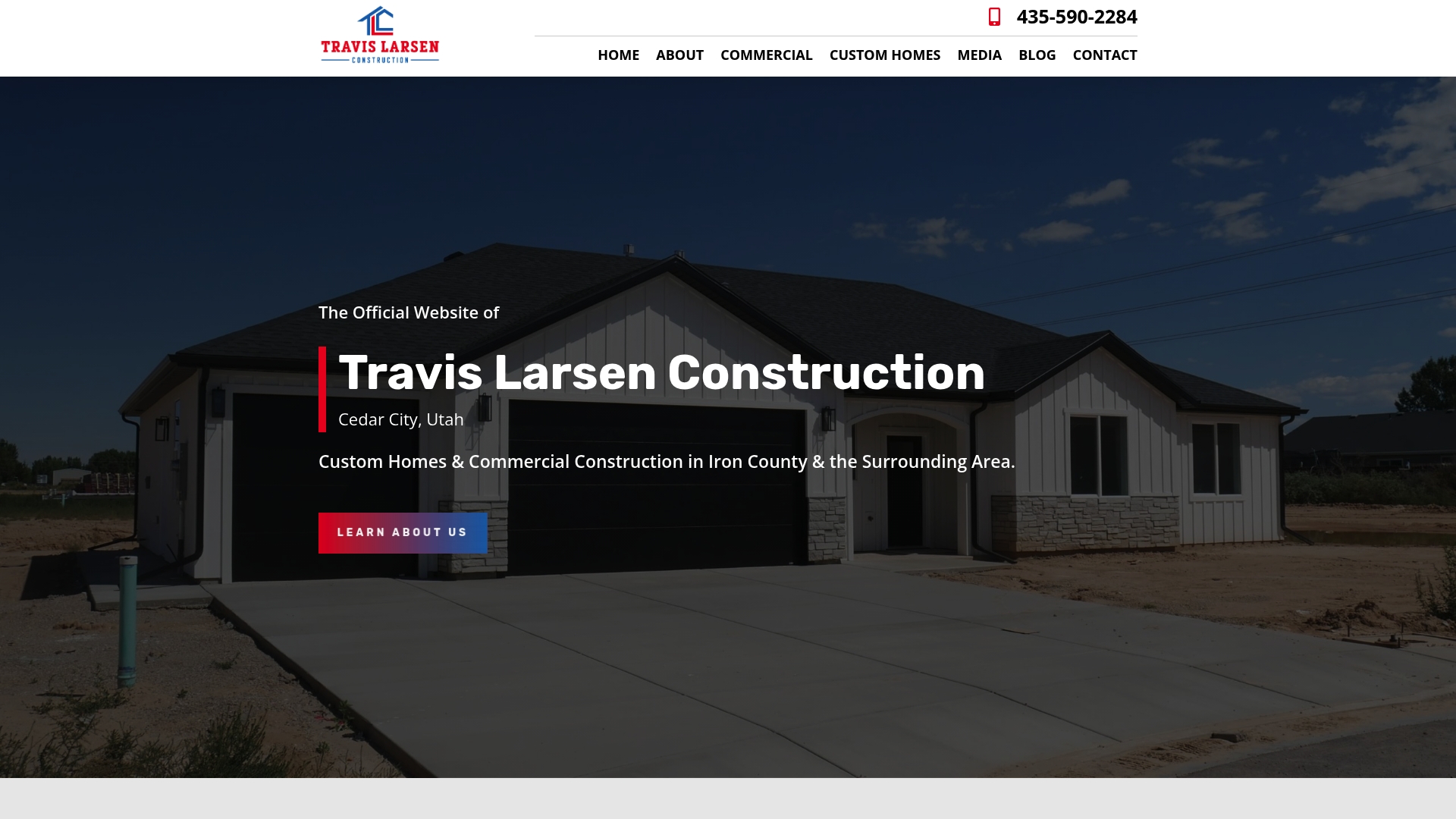 At Travis Larsen Construction, the process is built around exactly what this guide covers: transparent pricing, detailed contracts, clear communication, and deep local expertise. Every client gets a dedicated point of contact, line-item estimates from the start, and a team that treats your build with the same care they’d give their own home. Travis Larsen Construction specializes in high-end custom homes and brings the kind of hands-on experience that makes the difference between a stressful build and one you’ll enjoy telling people about. If you’re ready to move from planning to building, reach out to explore what a truly client-centered process looks like.